
Silicon Rectifier Manufacturer
Purevolt India manufactures industrial silicon rectifier systems for dependable AC-to-DC conversion in electroplating, anodizing, charging, and process applications. Each system can be engineered around the required DC voltage, current, input supply, duty cycle, cooling method, and load behavior. Manufacturing and export experience from Delhi since 1995.

Request an Application-Specific Quotation
Share your input supply, required DC output, application, and duty cycle for an application-specific quotation.
What Is a Silicon Rectifier?
A silicon rectifier is an industrial AC-to-DC power supply that uses silicon semiconductor devices, normally power diodes, to direct current into one polarity. A transformer establishes the required voltage level and may provide isolation, while the diode bridge performs rectification. Reactors or filters may be added where the process requires lower ripple.
How Silicon Semiconductor Rectification Works
A silicon power diode conducts when forward-biased and blocks current when reverse-biased. During successive portions of the AC waveform, different diodes conduct so that load current continues in the same direction. The result is pulsating DC.
The transformer ratio, diode drop, circuit impedance, and smoothing components determine output voltage and ripple. Since conducting diodes produce heat, adequate cooling is essential.
Practical Buyer Benefits
A diode-based silicon rectifier provides a proven and comparatively simple method of producing DC power. Because ordinary power diodes do not require firing-angle control, the rectifier stage can offer straightforward operation and maintenance when the application needs a fixed or externally adjusted output.
- Dependable AC-to-DC conversion
- Suitability for high-current loads
- Direct operator metering
- Equipment designed around the actual process requirement
How to Choose the Correct Voltage and Current Rating
Provide the following information before asking for a final selection:
Why Choose Purevolt India?
Purevolt India is a Delhi-based manufacturer and exporter of industrial power equipment with manufacturing experience dating from 1995. The company emphasizes custom design, direct manufacturing, testing, and technical support.
A Purevolt silicon rectifier proposal can be developed around the buyer’s AC supply, DC load, operating duty, and environmental conditions instead of selecting equipment solely from a current rating.
Frequently Asked Questions
Clients
Trusted by MNCs, government organisations, and industrial leaders across India and 60+ countries worldwide.






User Reviews
Real feedback from customers across Africa, the Middle East, and India.
Mr. Ridhwan
Tanzania
Mr. John
Nigeria
Mr. Mohammad
Iraq
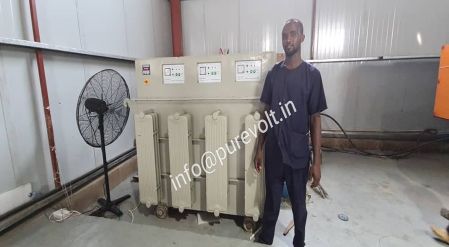
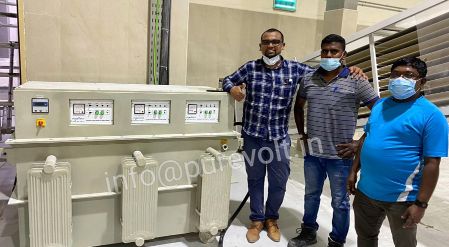
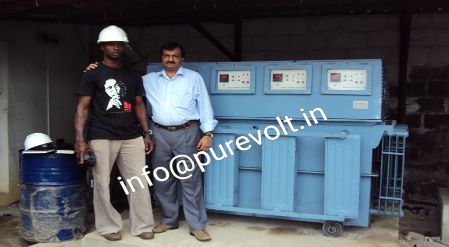
Overseas Installations & Trade Shows
Purevolt power-conditioning equipment running in factories, plating plants, and process lines across India, Africa, and the Middle East.



Get the Right Silicon Rectifier
Looking for a reliable silicon rectifier for electroplating, anodizing, charging or process applications? Share your input supply, required DC output, application, and duty cycle for an application-specific quotation.