
₹6,814.00
Input: 230 V AC
Output: 230 V AC
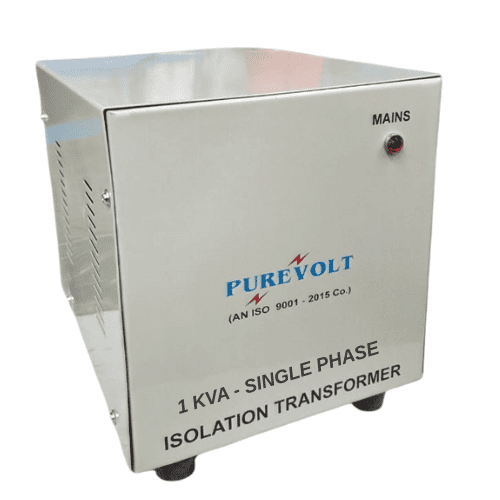
1 KVA Isolation Transformer
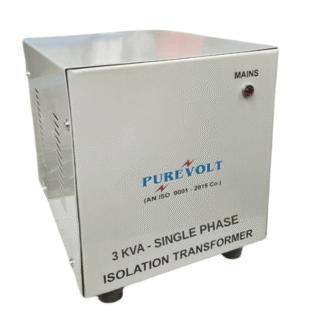
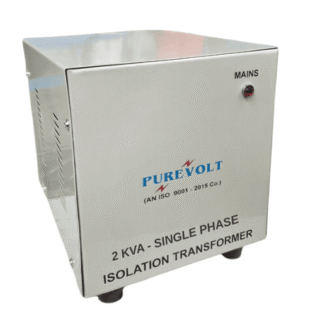
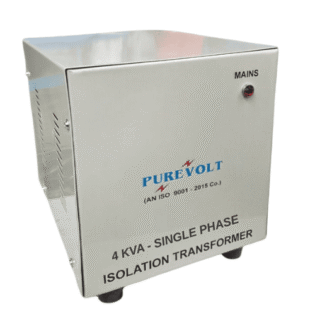
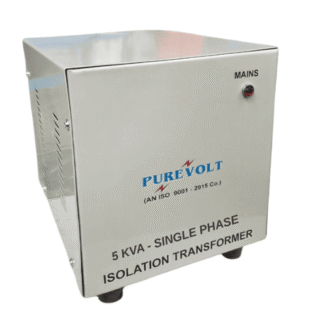
The Purevolt 1 KVA isolation transformer is a compact single-phase power transformer designed to provide galvanic separation between the incoming mains supply and a connected load. With a nominal 230 V AC input and 230 V AC output, it is suitable for low-capacity electronic equipment, laboratory instruments, communication devices, test benches, office systems, and control circuits that require an isolated power source.
Unlike a voltage stabilizer, an isolation transformer does not automatically correct a persistently low or high input voltage. Its primary purpose is to transfer power through separate primary and secondary windings without a direct conductive connection. This arrangement can improve supply separation and help reduce the transfer of common-mode electrical noise when the transformer, earthing, shielding, and connected equipment are correctly configured.
Where a 1 KVA Isolation Transformer Is Used
A 1 KVA model is suitable where the total apparent power requirement remains within the selected rating after allowance for inrush current, power factor, and operating margin. Typical applications include the following:
- Laboratory measuring instruments
- Desktop computers and small workstations
- Telecom and networking equipment
- Audio, recording and studio electronics
- CCTV and security-control systems
- Point-of-sale equipment
- Test and repair benches
- PLC and relay control circuits
- Small medical or diagnostic electronics
- Communication and signalling devices
- Sensitive office and commercial equipment
The transformer should not be selected only from the wattage printed on the appliance. Switch-mode power supplies, capacitive loads, motors, transformers, and equipment with high startup current may require additional capacity.
How the 1 KVA Isolation Transformer Works
The primary winding is connected to the 230 V AC mains supply. The alternating magnetic field created in the transformer core induces voltage in a physically separate secondary winding. Because the two windings are not directly connected, the secondary circuit is galvanically isolated from the primary circuit.
This isolated arrangement can be useful for sensitive equipment, troubleshooting, testing, and installations where a separate secondary reference is required. However, the exact safety benefit depends on how the secondary, neutral, earth, enclosure, protective devices, and connected equipment are installed. A qualified electrician should define the earthing and protection scheme.
Key Features
- 1 KVA single-phase capacity
- Nominal 230 V AC input
- Nominal 230 V AC output
- Separate primary and secondary windings
- Galvanic isolation between supply and load
- Compact design for small-load applications
- Air-cooled operation
- Enclosed construction for convenient placement
- Low routine maintenance
- Suitable for continuous use within rated conditions
- Designed for sensitive electronic and control loads
- Custom terminals, shielding and protection available on request
The final supplied specification should be confirmed before ordering, particularly where an electrostatic shield, special enclosure, non-standard voltage, or dedicated protection is required.
Benefits for Sensitive Equipment
Electrical noise and unwanted voltage references can interfere with measurement, communication, audio, and control electronics. A properly designed isolation transformer can help reduce common-mode interference and create separation between the mains circuit and the load circuit. It may also reduce the likelihood that certain disturbances are directly conducted from the supply to the connected equipment.
The transformer does not replace a surge-protection device, uninterruptible power supply, servo voltage stabilizer, residual-current device, circuit breaker, or correct earthing. These products perform different functions and may be used together where the application requires layered protection.
Calculate the total VA by reviewing the rated input of every device that will operate simultaneously. If equipment is marked in watts, consider its power factor and startup behavior instead of treating watts and VA as identical. Allow suitable headroom so that the transformer is not continuously operated at its maximum limit.
A 1 KVA transformer may support one device or several small devices, but the combined load must remain within the permissible current. At 230 V, 1 KVA corresponds to approximately 4.35 A under ideal unity-power-factor conditions. Actual selection should account for losses, load type, inrush, ambient temperature, and manufacturer recommendations.
Installation Guidelines
Install the transformer indoors in a dry, ventilated location with adequate clearance around the enclosure. Use correctly rated cables, terminals, upstream protection, and earthing. Avoid exposure to water, corrosive vapors, excessive dust, vibration, and blocked ventilation. Before commissioning, verify input voltage, output voltage, terminal identification, earth continuity, load current, and temperature rise.
1 KVA Isolation Transformer Price
The 1 KVA isolation transformer price depends on winding specification, insulation class, enclosure, terminals, electrostatic shielding, protection, taxes, and delivery requirements. The price shown on the product page applies to the listed standard configuration and may differ for customized designs.
Contact Purevolt with the connected-load details, equipment type, required voltage, installation location, and special safety or noise-control requirements to confirm whether this 1 KVA single-phase isolation transformer is suitable for your application.