
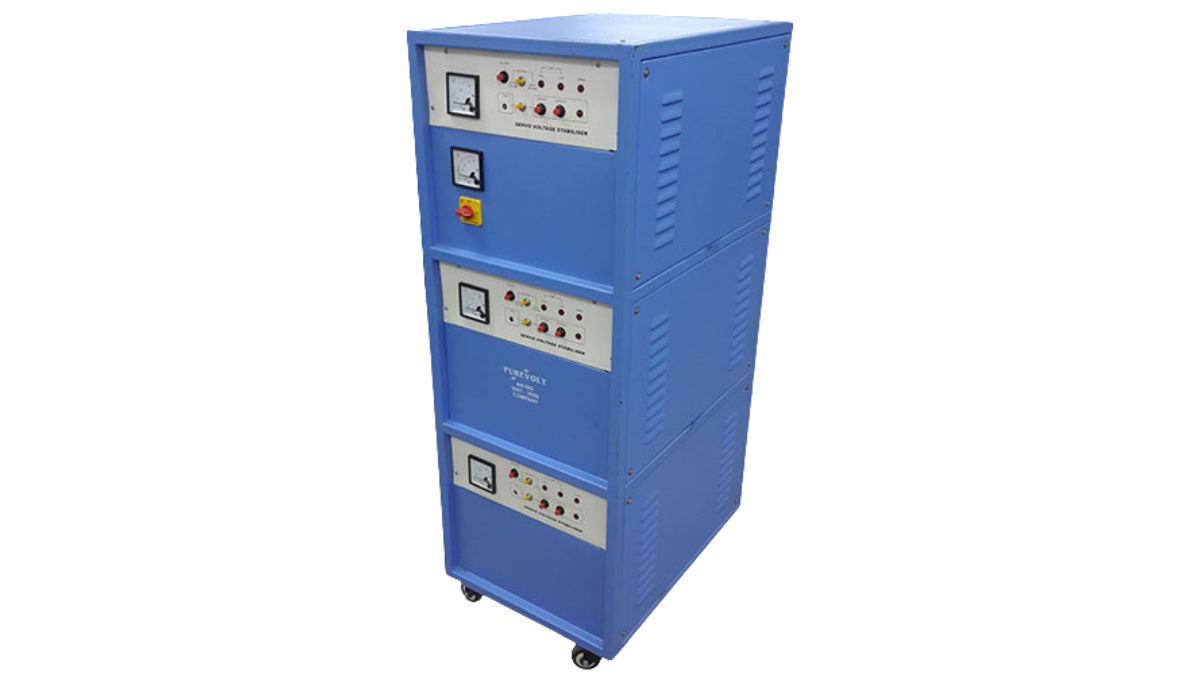
In layman’s terms, a Servo Voltage Stabilizer is a very simple device made using a combination of basic electronics and transformers such as a Variable Transformer and a Buck-Boost Transformer, coupled with servo motors to regulate the incoming power supply and provide the desired regulated output voltage.
Before we move ahead, we must understand that every machine, appliance, industry, plant, and other establishment has its own input and output voltage requirements. For example, some machines require 380 V output, while others require 400 V output, and so on. So let’s have a look at the factors to be considered before planning to buy a servo voltage stabilizer.
Factors to be considered while buying a Servo Voltage Stabilizer
Reputation / Brand
Make sure to contact the direct manufacturer of the servo voltage stabilizer so you get the right product at the right price. We are offering the best prices of Servo Voltage Stabilizers to our dealers and distributors. Check supplier websites and study their credentials, factory locations, and client lists in detail. Make sure the servo manufacturer is established in a reputed industrial area like Okhla Industrial Area and not operating from residential areas or remote locations.
Single Phase or Three Phase
The first step is to check whether you need a Single Phase or Three Phase Servo Stabilizer. This can be determined by your electrical grid connection. If you have a 1-phase grid connection, you require a 1-phase voltage controller. If you have a 3-phase connection, then you need a 3-phase servo voltage stabilizer.
KVA Rating of Servo Stabilizer
The next step is to determine the size of the servo voltage stabilizer required. This can be done by measuring your total load in amps after switching on your full load. Alternatively, you can list all your appliances and machinery, note their KVA ratings, and then add the total KVA of all machines. You can take help from Purevolt, and we will be happy to assist you in determining the right rating. Purevolt can supply servo stabilizers from 1 KVA to 2000 KVA.
Input Voltage Range
This is the most critical part. Servo stabilizers work within dedicated input voltage ranges. Some standard ranges are 340–480 V AC, 300–460 V AC, 240–480 V AC, 190–480 V AC, etc. By input voltage, we mean the band in which the servo stabilizer is expected to boost or buck the voltage and maintain output voltage as per the required settings. So we must ensure that we have the data of low and high voltage conditions at the site and then get the servo stabilizer designed accordingly.
Output Voltage
Normally, the standard output voltage range is between 380 to 415 V AC. Some machines require 380 V, some require 400 V, and some may require 415 V. The optimal setting is 400 V and can be customized as per customer requirements. Our servo stabilizers have the facility to adjust output voltage between 380–415 V AC.
Unbalanced Type / Balanced Type
If you have a balanced load and balanced input supply, you should go for a balanced type servo stabilizer. If you operate in conditions where the load is uneven/unbalanced and even the incoming supply is unpredictable, then you should opt for an unbalanced type servo stabilizer. Normally, unbalanced type voltage regulators are the best option and are mostly used by industries.
Maintenance
Make sure that you are buying a servo stabilizer that has been designed keeping in mind ease of maintenance and repair. At Purevolt, we manufacture servo stabilizers with plug-and-play control cards and easy replacement of parts, so even a simple electrician can perform basic maintenance.
Export Markets
If the manufacturer is exporting their servo stabilizers to various countries, it automatically builds their reputation, as their products are functioning in different environments across the world. This also makes the manufacturer more reliable because their products are performing and selling in multiple countries.